
Distillery District Web Design for Heritage Specialists
Repointing 19th-century brick on a pedestrian lane is specialist work. Your site should prove you've done it before anyone calls.
Projects from $1,500. Month-to-month. Toronto-based.
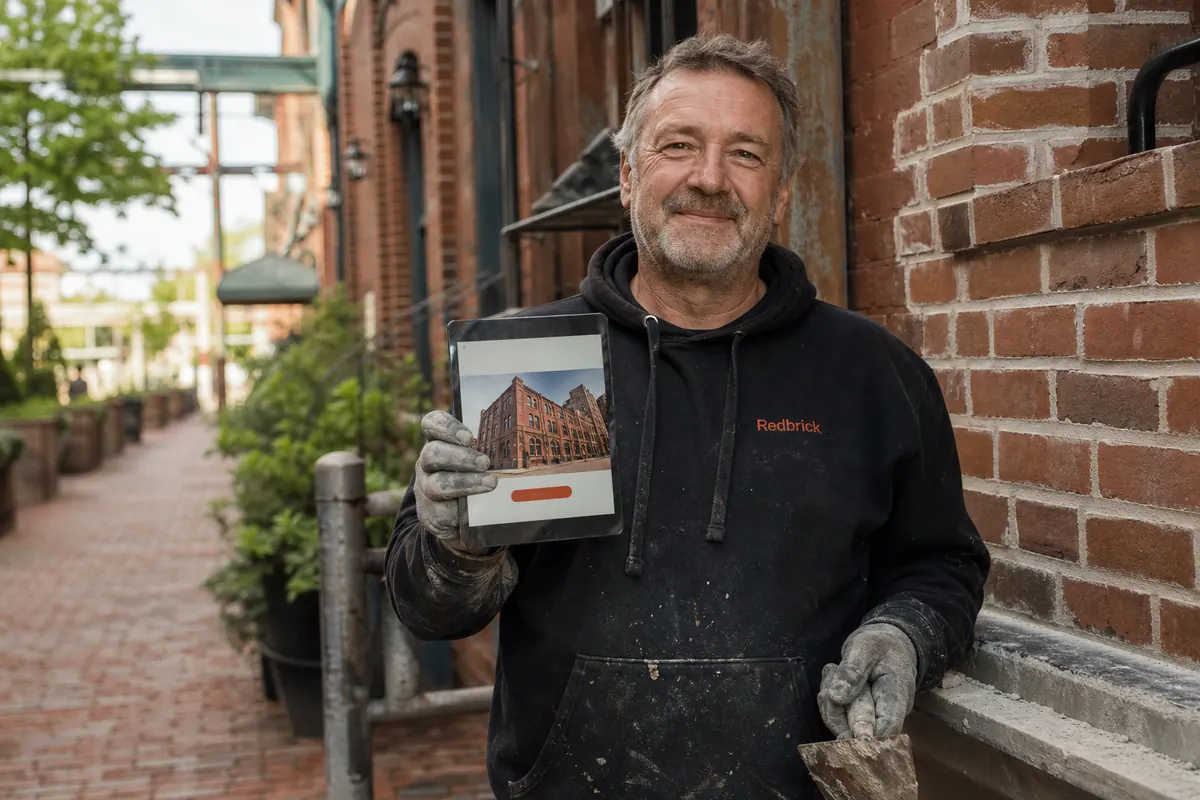
What a property manager checks before hiring a mason
Searched by material
Owners and managers search "brick repointing" or "heritage window repair", then study the results closely.
Past projects before price
Heritage clients compare portfolios and methods first, and only talk numbers with contractors who pass that test.
Condo searches move fast
Residents in the newer towers nearby search on a phone and book whoever answers clearly first.
Show the method behind the finished wall, with photos from each stage.
Selling specialist work on 19th-century brick
Project pages do the heavy lifting for a heritage trade. Each one shows the wall or window before, the method, the materials and the result, written plainly enough for a property manager to forward to an owner. Quick, simple service pages handle the residential side for the condos nearby. Your Google Business Profile lists the specialty categories, and structured data labels each service so search engines can tell what you're qualified for.
The district grew from the Gooderham and Worts distillery, and its Victorian industrial buildings now hold shops, galleries, restaurants and offices along pedestrian-only brick lanes. Condo towers have gone up at its edges and in the West Don Lands next door. So the work splits by building: masonry, heritage carpentry and commercial HVAC for the old ones, and suite renovations, electrical and cleaning for the new ones.
Heritage work rarely goes to the lowest quote. A manager looking for brick repair searches the skill, then reads how each contractor talks about mortar, old windows or timber. Vague copy reads like inexperience. One clear paragraph on why you'd use a softer lime mortar on old brick says more about you than any number of stock photos.
Results from our team’s client campaigns
The Leads-First Method
- 1
Strategy call
We look at your site, your Maps rankings and last year’s jobs.
- 2
Plan & price
You get a written plan with a fixed price and a launch date.
- 3
Design & build
You review real pages before anything goes live.
- 4
Launch & grow
After launch we track calls and fix what isn’t pulling its weight.
What your Distillery District website includes
- Custom design, no templates
- Service pages for every job you want more of
- Google Business Profile setup and Maps optimization
- Built for AI search
- Fast on phones
- You own the domain, site and logins
Also serving nearby

Distillery District web design questions
Can the site show heritage work properly?
That's what the project pages are for. Each one covers the problem, the method and the finished result with your own photos, in plain language. A property manager gets a reason to choose you, and search engines get clear evidence of what you do. A few strong projects beat a large gallery with no explanation.
What does a portfolio-led site cost?
Project pages take real writing and photo work, so they're the main driver. A site with five detailed projects and a handful of service pages sits above our $1,500 starting point. We scope it on a strategy call, and nothing begins until you've approved the written price.
Do we need separate pages for condo work and heritage work?
Yes. A condo owner looking for an electrician and a property manager looking for heritage masonry want different things, and one page can't serve both well. Separate pages keep each message clear and give Google two distinct pages to rank. They can still share your reviews, profile and branding.
Can AI tools tell what our specialty is?
Only if your site spells it out. Pages that explain each specialty, answers to the questions owners ask about old buildings and structured data that labels your services are what tools like ChatGPT and Google's AI Overviews read. Nobody can promise a mention, but a page that never says "heritage masonry" won't get one for it.